Source reusable ecofriendly kitchen loofah sponge for Car, Kitchen, Bath
Find 30 options for the reusable ecofriendly kitchen loofah sponge designed for car detailing, kitchen cleaning, and bath use. Buyers can compare specifications, materials, and customization features across multiple suppliers in China.
Key considerations
Products List





Comprehensive Sourcing Guide
Strategic Sourcing Guide for Reusable Eco-Friendly Kitchen Loofah Sponges
Understanding Product Composition and Material Variants
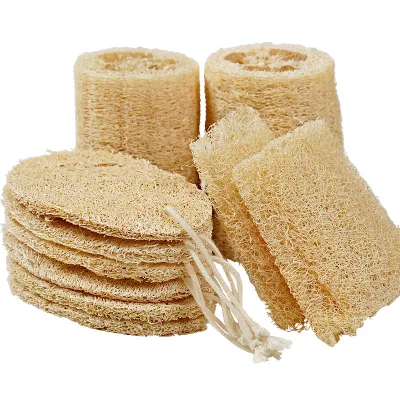
The core keyword "reusable eco-friendly kitchen loofah sponge" describes a category of cleaning tools designed to replace synthetic, single-use alternatives. When evaluating potential suppliers, buyers must first distinguish between the primary material compositions observed in the market. The supplied data indicates a clear divergence between traditional synthetic sponges and natural fiber alternatives. One distinct segment utilizes "Sponge" material, often characterized by specific dimensions such as 7172.5cm and a weight of 37g, which are typical for high-absorbency cleaning tools. However, the "eco-friendly" and "reusable" descriptors specifically align with products labeled as "Loofah Sponge" or "Biodegradable Loofah Sponge." These items are frequently described as "Plastic-Free" and "Eco-Friendly," suggesting a composition that avoids synthetic polymers.
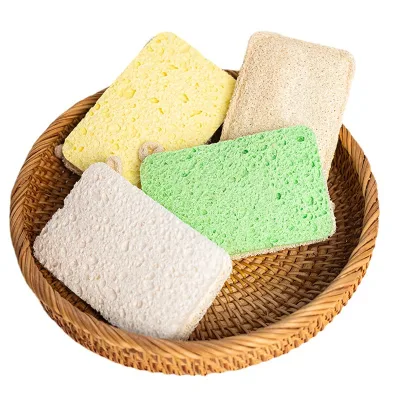
A critical observation in the product data is the specification "loofah+wood pulp cotton." This composite material suggests a hybrid approach where natural loofah fibers are combined with wood pulp to enhance durability and cleaning efficiency. This combination supports the "Super Cleaning Dish" function noted in the specifications. Buyers should verify if the supplier offers pure loofah variants or if the wood pulp component is essential for the specific cleaning performance required. The "Sustainable" and "Stocked" attributes indicate that these items are often kept in inventory for immediate shipment, which is a significant advantage for buyers seeking to minimize lead times. Furthermore, the "Reusable" nature of these products is a key selling point, but it requires verification of the material's ability to withstand repeated washing cycles without degrading, a factor that synthetic sponges often handle differently than natural fibers.
Technical Specifications and Dimensional Standards
Technical specifications are the backbone of any procurement decision, ensuring that the product fits the intended application. The data reveals a wide range of dimensional standards, which buyers must align with their operational needs. For instance, specific models are listed with dimensions of 104cm, 11 X 7 cm, and 7112cm. Other listings provide a broader range of sizes, including 10cm, 20cm, 30cm, and 40cm, catering to different cleaning tasks from delicate dishware to heavy-duty scrubbing. The "Standard" field often lists these exact measurements, such as "121212" for cubic forms or "717*2.5cm" for rectangular shapes.
When sourcing, it is essential to note that "prod_model" codes vary significantly, such as "FT-HF-FJ013A," "A1-CLS21," "MS012-898802521400," and "PD-SGL." These codes serve as unique identifiers for specific product configurations. Buyers should not assume that a model code from one supplier is interchangeable with another without verifying the physical dimensions and material composition. The "prod_packing" section also offers technical insights; some products are packed in "Carton" formats with dimensions like 504550cm, while others are sold as "Single Piece Package" or "in Bulk+Carton." This variation impacts logistics and storage requirements. For example, a "Single Piece Package" might be ideal for retail distribution, whereas "Bulk+Carton" is more suitable for industrial or institutional procurement. The "Color" attribute, ranging from "light yellow" to "White / Beige" and "Random," also influences the aesthetic consistency required for branded products.
Compliance, Certification, and Environmental Claims
The "eco-friendly" and "biodegradable" claims associated with loofah sponges require rigorous verification to avoid greenwashing. While the supplied data mentions "FSC" and "GOTS" as low-confidence background certifications, these should not be assumed as standard for all listed products without direct confirmation from the supplier. The "Special Feature" field explicitly lists "Plastic-Free," "Eco-Friendly," and "Reusable," which are strong indicators of environmental intent. However, buyers must treat these as observations rather than guaranteed certifications unless accompanied by third-party documentation.
For products claiming to be "Biodegradable Loofah Sponge," the verification process should focus on the breakdown timeline and the absence of synthetic binders. The "Material" attribute of "Sponge" in some listings may imply synthetic content, which contradicts the "Plastic-Free" claim found in others. Therefore, a clear distinction must be made between natural loofah and synthetic sponge materials. The "Standard" field often lists the product type, such as "Car Detailing Sponge" or "7172.5cm, 37g," but these do not inherently confirm environmental compliance. Buyers should request specific test reports regarding biodegradability and chemical safety. The "Anti-Ultraviolet" attribute is listed as "No" for some items, which may be relevant for products intended for outdoor use or long-term storage in sunlight, but less critical for indoor kitchen applications.
Cost Drivers and Minimum Order Quantity Analysis
The economic landscape of sourcing reusable loofah sponges is defined by a complex interplay of Minimum Order Quantity (MOQ) and unit pricing. The observed price range in the market is between $0.07 and $1.50 USD, a significant variance that reflects differences in material quality, size, and customization levels. The "MOQ" values in the data are equally diverse, ranging from as low as 200PCS to as high as 10,000PCS. Specific listings show MOQs of 500PCS, 1000PCS, and 200PCS, indicating that suppliers have varying thresholds for production runs.
Buyers must understand that lower MOQs, such as 200PCS or 500PCS, often come with a higher unit cost due to the setup costs of production lines. Conversely, larger orders, such as 10,000PCS, may benefit from economies of scale but require significant capital investment and storage capacity. The "Customization" attribute is a major cost driver; while "Customization: Available" is listed, some products are marked as "Non-Customized." Customization options, such as adding a "Logo" (which is noted as "Acceptable for Logo"), will inevitably increase the unit price and potentially the MOQ. The "Selling Units" field indicates that some items are sold as "Single Item," which is rare for B2B but suggests a retail-ready format. For bulk procurement, the "In Bulk+Carton" packing method is the most cost-effective, reducing per-unit shipping costs. Buyers should also consider the "Sample" availability; "Freely Sample" is mentioned, which allows for cost-effective quality testing before committing to large orders.
Typical Applications and Usage Scenarios
The versatility of reusable loofah sponges extends beyond simple dishwashing, as evidenced by the diverse "Usage" attributes in the data. While the core keyword focuses on "Kitchen" applications, the data also lists "Car," "Bath," and "Kitchen,Bath" as valid usage scenarios. This indicates that the same product can be marketed for multiple sectors. For kitchen use, the "Super Cleaning Dish" function is paramount, requiring a balance of abrasiveness and absorbency. The "Car Detailing Sponge" standard suggests that some loofah products are specifically engineered for automotive care, offering a gentle yet effective cleaning surface for vehicle paint.
The "Type" attribute, "Cleaning Washing Sponge," reinforces the primary function of these items. However, the "Keyword" "Car Detailing Sponge" highlights a niche market where the eco-friendly aspect is increasingly valued. For bathroom applications, the "Bath" usage implies a need for softness and resistance to mold, which natural loofah fibers can provide if treated correctly. The "Color" options, such as "light yellow" or "White / Beige," are often chosen to match the aesthetic of the cleaning environment. The "Random" color option suggests a cost-saving measure for buyers who do not require color consistency. When selecting a product for a specific application, buyers should cross-reference the "Standard" dimensions with the physical constraints of the cleaning task. For example, larger sponges (40cm) may be better for car detailing, while smaller ones (7cm) are ideal for delicate kitchenware.
Supplier Evaluation and Quality Control Protocols
Evaluating suppliers for reusable loofah sponges requires a multi-faceted approach that goes beyond price and MOQ. The "Location" data points to key manufacturing hubs in China, specifically "Zhejiang," "Shanghai," and "Guangdong Shenzhen." These regions are known for their textile and sponge manufacturing capabilities, but buyers should verify the specific factory's experience with natural fibers. The "Customization" capability is a strong indicator of a supplier's flexibility; those offering "Customized" options are likely more adaptable to specific buyer requirements. However, the presence of "Non-Customized" items suggests that some suppliers may only offer standard SKUs.
Quality control should focus on the consistency of the "Material" and the durability of the "Reusable" claim. Buyers should request samples to test the "Super Cleaning Dish" performance and ensure the "Plastic-Free" claim holds up under repeated use. The "prod_packing" method is also a quality indicator; "Single Piece Package" suggests a higher level of care in handling, while "in Bulk+Carton" may expose the product to more handling damage. The "Standard" field, which often lists specific dimensions, should be used as a benchmark for quality control inspections. Any deviation from the stated "7172.5cm" or "11 X 7 cm" should be flagged. Additionally, the "Feature" attributes like "Sustainable" and "Stocked" should be verified through site audits or third-party reports to ensure the supplier maintains consistent inventory levels and sustainable practices.
Long-Term Procurement and Supply Chain Considerations
Sourcing reusable eco-friendly kitchen loofah sponges is not just a one-time transaction but a strategic decision that impacts long-term supply chain resilience. The "Stocked" attribute indicates that many suppliers maintain inventory, which is crucial for buyers seeking to avoid stockouts. However, the "Lead Time" is not explicitly provided in the data, so buyers must proactively inquire about production schedules, especially for customized orders. The "Sample" availability, noted as "Freely Sample," is a valuable tool for long-term planning, allowing buyers to test product quality before scaling up orders.
The "Customization" aspect, including "Logo" acceptance, offers opportunities for brand differentiation but requires careful management of lead times and costs. Buyers should establish a clear communication channel with suppliers to ensure that "Customized" orders meet the "Standard" specifications. The "Location" of the supplier, whether in "Zhejiang," "Shanghai," or "Guangdong Shenzhen," can influence shipping costs and delivery times. For global buyers, understanding the logistics from these Chinese hubs is essential. Finally, the "MOQ" flexibility, ranging from 200 to 10,000PCS, allows buyers to adjust their order volumes based on market demand, providing a buffer against fluctuations in sales. By carefully evaluating these factors, buyers can build a robust supply chain for high-quality, eco-friendly cleaning solutions.
FAQs
What materials are used for reusable ecofriendly kitchen loofah sponges?
Materials include natural loofah combined with wood pulp cotton or synthetic sponge. Some listings specify loofah plus wood pulp cotton for enhanced durability and cleaning efficiency, while others use standard sponge material.
Which specifications are available for these sponges?
Available specifications vary by model, including dimensions like 7x11x2cm, 11x7cm, and 10x4cm. Larger options range from 10cm to 40cm, and some cubic forms measure 12x12x12cm for different cleaning tasks.
Can buyers customize the logo on these sponges?
Yes, customization is available for adding logos to the products. Some suppliers accept logo requests, while others offer non-customized standard items, so buyers must verify specific customization capabilities before ordering.
How does the minimum order quantity vary for these sponges?
Minimum order quantities range from 200 pieces to 10,000 pieces depending on the supplier and product type. Specific listings show MOQs of 200, 500, and 1000 pieces, affecting bulk procurement strategies.
Where are these sponges typically manufactured?
Manufacturing locations include Zhejiang, Shanghai, and Guangdong Shenzhen in China. These regions are known for sponge production, and buyers should verify the specific origin for each supplier they consider.
What are the packaging options for these sponges?
Packaging options include single piece packages, bulk cartons, or customized packing. Some products are packed in cartons measuring 50x45x50cm, while others use single piece packaging for retail distribution.